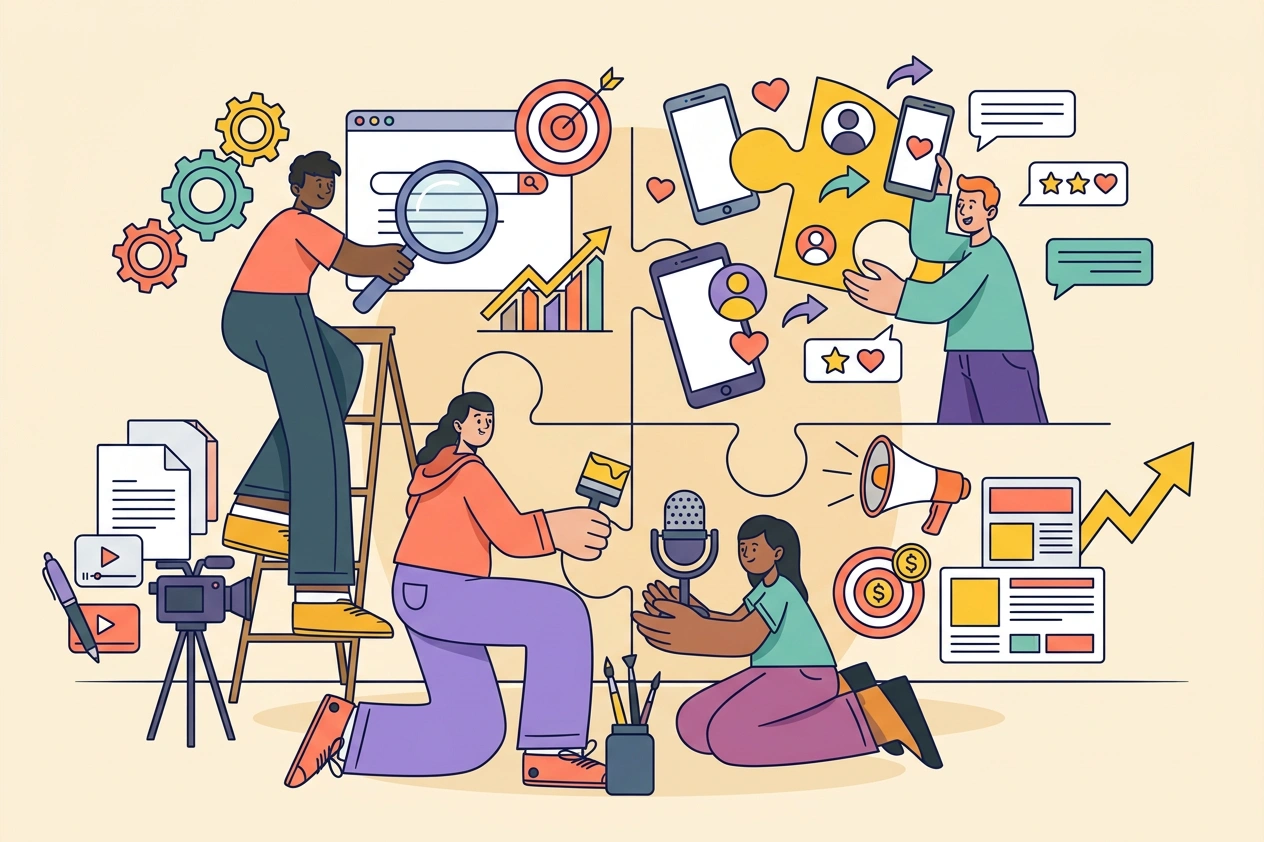
once you strip away all the fancy jargon, digital marketing actually boils down to four main pieces: Search Engine Optimization (SEO), Content Marketing, Social Media, and Paid Ads.
Think of these four parts like a team. Each one has a completely different job, but when they work together, your online presence actually starts making sense. So if your a beginner trying to figure this out, lets break them down one by one in normal human language.
1. SEO (Search Engine Optimization) – The Slow & Steady Traffic Engine
SEO is basically the process of getting your website to show up on Google (or Bing) when people search for stuff, without paying for ads.
Imagine you sell handmade ceramic coffee mugs. When someone types “best ceramic coffee mugs” into Google, you want your website to pop up on that first page. Why? Because almost nobody clicks on page two.
SEO is split into a few main parts:
- Keywords: These are the actual words people type into search boxes. You need to know what your audience is searching for and naturally put those phrases on your website.
- On-Page SEO: This means optimizing what’s actually on your site — like writing good title tags, making sure your articles are easy to read, and putting keywords in your headers.
- Technical SEO: Don’t let the word “technical” scare you! This just means making sure your site loads fast, works great on mobile phones, and doesn’t have broken links.
- Backlinks: When other websites link back to your website, Google sees it like a vote of trust. The more reputable sites linking to you, the higher you rank.
The catch with SEO? It takes time! SEO is definately a long-term game. It can take a few months to see big results. But the amazing thing is that once you rank high, you get “free” organic traffic coming to your website every day.
2. Content Marketing – Giving Value First
If SEO is the engine, content is the actual fuel. Content marketing is all about creating useful, interesting, or entertaining stuff — like blog posts, videos, podcasts, and guides — to attract people to your brand.
A lot of beginners make the mistake of thinking marketing is just shouting “BUY MY PRODUCT!” all day. But nobody likes being sold to constantly. Content marketing flips the script: instead of pushing your product, you provide helpful answers to people’s problems.
For example, if you sell workout gear, you shouldn’t just post photos of your gym shorts with prices. You could write a blog post called “5 Exercises to Fix Lower Back Pain” or film a video showing “How to Start Running for Beginners.”
When people find your helpful content:
- They learn something useful.
- They start trusting your brand.
- When they finally need to buy gym gear, guess who they’ll buy from? You!
Good content feeds every other part of marketing. You use content for SEO, you share content on social media, and you even use content inside your paid ads!
3. Social Media Marketing – Building a Real Community
Social media is probably the part of digital marketing you’re most familiar with because you likely use it every day. Whether it’s Instagram, TikTok, LinkedIn, or YouTube, social media is where your brand actually talks to real people.
The biggest mistake beginners make here is trying to be everywhere at once. You don’t need to post on 6 different platforms every single day — you will burn out super fast! Instead, pick 1 or 2 platforms where your target audience actually hangs out.
Here is a quick look at how different platforms feel:
- Instagram & TikTok: Great for visual products, lifestyle brands, short video reels, and reaching younger audiences.
- LinkedIn: Essential if you sell services or products to other businesses (B2B) or want professional networking.
- YouTube: Amazing for long-form video tutorials, product reviews, and building deep trust.
Social media isn’t just about posting graphics and waiting for likes. The magic keyword here is engagement. You have to reply to comments, answer direct messages, ask questions, and treat your followers like actual humans. It’s about building a loyal community, not just collecting empty numbers.
4. Paid Ads (PPC) – The Fast Track Button
So, SEO takes months, building content takes effort, and social media growth can be slow. What if you need visitors to your site today?
That’s where Paid Ads come in. You might hear people call this PPC (Pay-Per-Click) or SEM (Search Engine Marketing).
Unlike SEO where traffic is organic (free), paid ads mean you pay money to platforms like Google, Meta (Facebook/Instagram), or TikTok to jump straight to the top of people’s feeds or search results.
There are two main types of ads beginners usually run into:
- Search Ads (e.g., Google Ads): You pay to show up at the very top of Google when someone searches for a specific keyword. If someone clicks your ad, you pay a small fee. This works great because the searcher already has high intent — they are actively looking for a solution right now.
- Social Media Ads (e.g., Meta Ads): These show up while people are scrolling through Facebook or Instagram. You can target people based on their specific interests, location, age, or behavior.
The biggest advantage of paid ads is speed and control. You can turn them on in 10 minutes and get traffic immediately. The downside? As soon as you stop paying money, the traffic completely stops. If you don’t manage your budget carefully, you can spend a lot of cash very quickly without getting sales.
How They All Work Together (The Secret Sauce)
The biggest secret in digital marketing is that non of these four pillars work in a vacuum. The real magic happens when you connect them together!
Here’s an example of how a simple campaign works when all four pieces team up:
- You write a great, helpful blog post on your website (Content Marketing).
- You optimize the article so it can rank on Google over time (SEO).
- You break that article down into short tips and share them on Instagram (Social Media).
- You spend $10 running a targeted ad to show that blog post to people who have never heard of your brand before (Paid Ads).
See how that works? You aren’t doing four completely separate jobs; you’re just building one solid system.
If all of this still feels a little overwhelming, don’t worry! Nobody becomes a digital marketing expert overnight. Start small by picking just one area to focus on first — maybe write a few good pieces of content or get comfortable posting on one social channel. Once you get the hang of that, you can slowly layer in SEO and experiment with small ad budgets. Keep it simple, test things out, and don’t be afraid to make a few mistakes along the way!
