When I first heard the phrase “digital marketing strategy,” I honestly pictured a group of corporate people in sharp suits staring at complicated graphs in a fancy boardroom. It sounded super intimidating. I thought you needed a marketing degree or thousands of dollars in the bank to even get started.
Turns out, I was completely wrong!
A digital marketing strategy is really just a simple game plan. Its basically an answer to one core question: How are you going to use the internet to turn total strangers into happy customers?
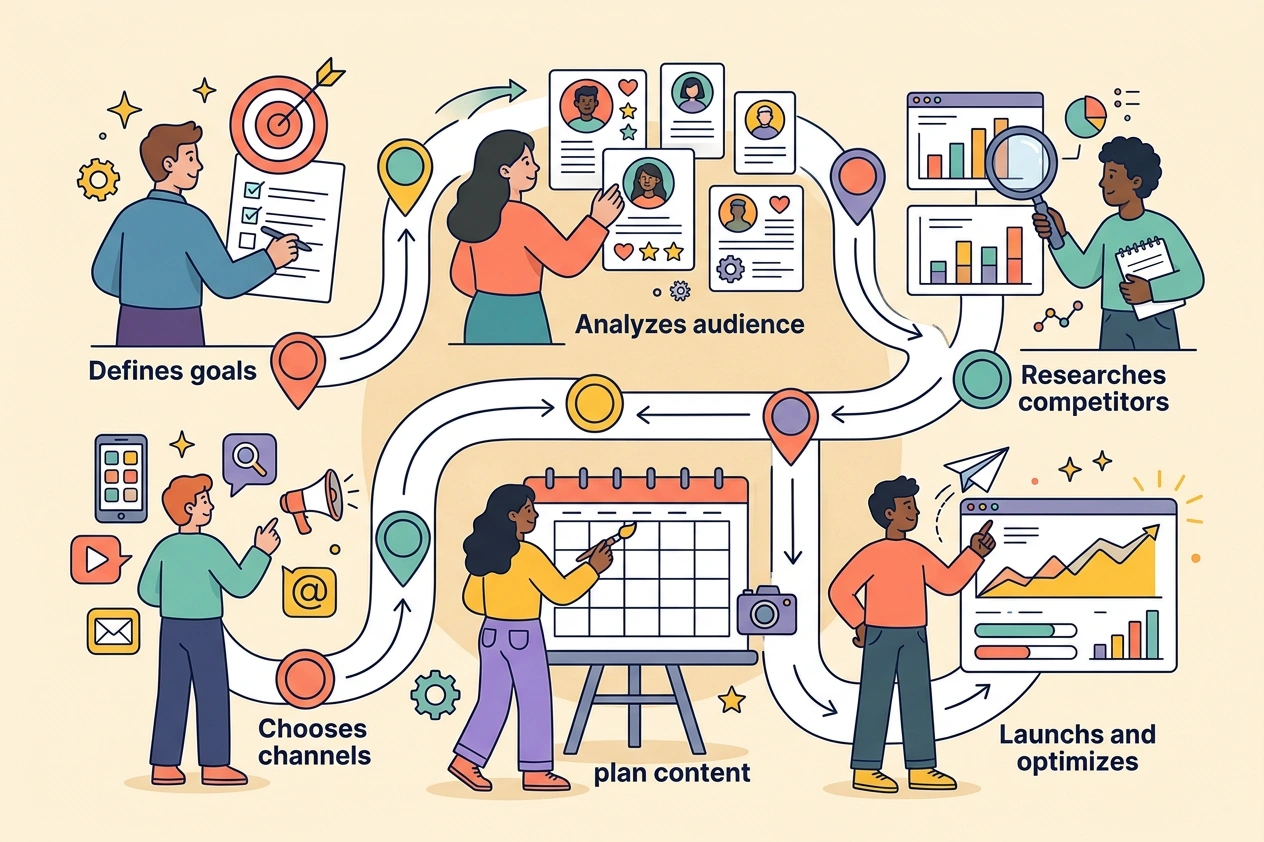
Whether you’re launching a side hustle, selling handmade candles online, or just trying to get more local clients for your service business, having a written plan will save you a ton of time and money. Here is the exact step-by-step process I used to build a strategy from scratch—written in plain English without all the annoying buzzwords.
1: Figure Out What You Actually Want (Clear Goals)
Before you jump on TikTok or spend a single dollar on ads, you need to know where your going. If you don’t pick a destination, you will just end up running around in circles and wasting energy.
When most beginners set goals, they say things like, “I want to get famous on Instagram” or “I want to make a lot of sales.” But those are too vague. You want to make your goals specific and measurable so you actually know when you hit them.
Instead of saying “I want more website traffic,” try setting clear targets like:
- Get 300 visitors to my website every month by the end of next quarter.
- Collect 50 email subscribers in my first 30 days.
- Make 5 sales through organic social media posts this month.
Pick 2 or 3 small, realistic goals to start with. You can always set bigger goals later once you get the momentum rolling!
2: Know Who You Are Talking To (Your Audience)
Here is a huge mistake I made when I first started out: I tried to market to everyone. I thought, “Hey, my offer is great, anybody could use it!”
Big mistake. When you try to talk to everybody, you end up appealing to nobody. Your message becomes too generic and gets lost in the noise.
You need to create what marketers call a “Buyer Persona.” Don’t let the fancy name scare you—it just means making a profile of your ideal customer. Grab a notebook and answer these basic questions:
- Who are they? (Age group, job, general location)
- What are their biggest headaches or problems right now?
- Where do they hang out online? (Are they scrolling TikTok at night, checking LinkedIn during work, or searching Pinterest for ideas?)
- What makes them hesitate before buying something like yours?
For example, if you sell eco-friendly dog toys, your target audience isn’t “all dog owners.” It’s probably environmentally conscious pet parents who treat their dogs like family and spend time on Instagram or pet forums. Once you picture that one specific person, writing posts and emails becomes ten times easier.
3: Pick Your Channels (Don’t Try to Do Everything!)
When you’re starting out, it’s super tempting to sign up for every single platform. You create a Twitter account, a Facebook page, a YouTube channel, a Pinterest account, a TikTok, and a podcast.
Please… don’t do this to yourself! You will get burned out in two weeks, trust me. I tried doing this and ended up posting half-baked content everywhere that nobody cared about.
It is much better to master ONE or TWO platforms where your target audience already hangs out.
Here is a quick breakdown of the main digital marketing channels:
If you have zero budget, I recommend picking one main content home (like a blog or YouTube channel) and one social platform (like Instagram or LinkedIn), plus a basic email newsletter to stay in touch with people.
4: Create Content That Helps People
Now that you know your goals, your audience, and your channels, it’s time to figure out what to post. This is where a lot of beginners freeze up. “What am I supposed to post about every single day?”
The secret to good content is surprisingly simple: Solve problems and add value.
Don’t just post “BUY MY STUFF!” 24 hours a day. People will tune you out immediately. Instead, follow the 80/20 rule:
- 80% of your content should educate, entertain, or help your audience.
- 20% of your content should directly promote your products or services.
For instance, if you run a local personal training business, you shouldn’t just post sales flyers. You could share a 5-minute morning stretching routine, a simple meal prep guide for busy moms, a honest story about a workout mistake you made, and then invite people to book a free consultation call.
5: Make a Simple Content Schedule
Consistency is the real secret sauce in digital marketing. Posting five times in one day and then disappearing for three weeks won’t get you anywhere.
To keep yourself accountable, build a super simple schedule. You don’t need expensive software—a basic Google Sheet or a wall calendar works great.
Try mapping out a manageable weekly routine:
- Monday: Post an educational tip or quick guide.
- Wednesday: Share a behind-the-scenes photo or personal story.
- Friday: Post a customer review or promote your main offer.
Batching your content—like setting aside two hours on Sunday to draft all your posts for the week—will save your sanity and stop you from stressing out every morning.
6: Track Your Numbers and Fix What Isn’t Working
Congratulations! You put your strategy into action. But how do you know if the the strategy is actually working?
You have to check your stats. Don’t worry, you don’t need to be a math genius for this. Just look at the free insights built into your social accounts or look at basic website visits once a month.
Pay attention to a few basic things:
- Which posts got the most comments or saves?
- How many people actually clicked the link in your bio?
- Is your email list slowly growing or completely flat?
If something worked really well, figure out why and do more of it! If a certain type of post tanks repeatedly, stop wasting time on it and try something else. A good digital marketing strategy isn’t set in stone—its something you constantly tweak as you figure out what your audience likes best.
Building your first strategy feels like a lot of work at first, but taking it step-by-step makes it totally manageable. You don’t need a huge team or thousands of dollars to get real results online. Just focus on understanding your audience, showing up consistently, and giving people useful content. Start small, learn as you go, and don’t be afraid of making a few mistakes along the way!
